
Weaving Indigenous Communities into the Fabric of Wisconsin Cannabis
by Bri Smith, CG
The deep and resonating drum beat reverberated in my chest —the tempo fast, deliberate, and filled with energy. The soulful chants and singing soon flooded the room from corner to corner. My attention was pulled to the sight of First Nation Veterans entering the room as color guard, bearing Country, State, Prisoner of War, and military flags with pride. But ahead of them all led the Eagle Staff, adorned with feathers, leather, and beads, carrying prayers to the ancestors – clearing the path forward with honor and protection.
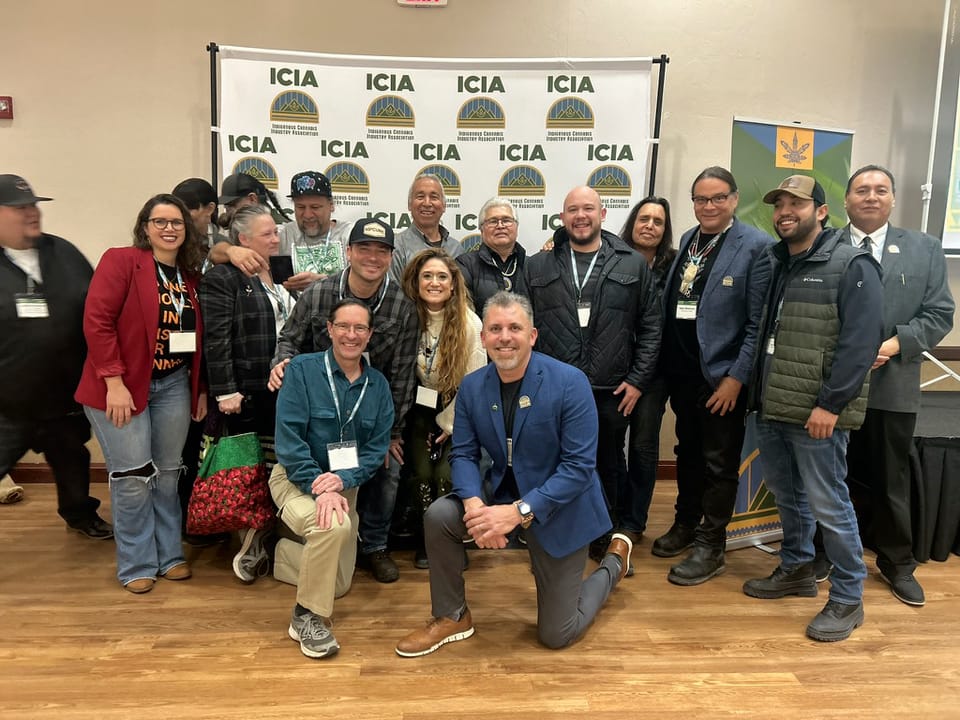
As I take it all in, I become emotional. There’s something in the music, the strong beat so meticulously matched between 8 men, and the respect for tradition that pulls at something deep within me. I’m reminded that we are in a small conference center in the northeastern woods of Wisconsin—a place I never anticipated I’d be discussing cannabis. In this moment, it doesn’t feel foreign, but a place where any spirit is at home. When the Indigenous Cannabis Industry Association (ICIA) isn’t hosting cannabis industry professionals at the Mole Lake Casino for conferences, it is home to the Sokaogon Chippewa, also known as the Mole Lake Band of Lake Superior Chippewa. A proud community that has fostered this land long before settlers ‘promised’ it back to them in 1854.
ICIA, or the Indigenous Cannabis Industry Association, is a 501(c)(6 Trade association dedicated to the advancement and development of cannabis and hemp in Indian Country. ICIA has a mission to create opportunities and equity for Indigenous people while empowering their communities through policy, programming, and outreach initiatives.
Chairman Robert VanZile kicked off the conference by leading the group in an opening prayer in his native language. It was a beautiful glimpse into a practice that has been systematically and violently suppressed for hundreds of years. In this room, however, it was alive and well.
The mic was passed to Rob Pero, Founder and CEO of Canndigenous and Perodigm, and a board member of ICIA. He first honored the tribal leaders present in the room and then spoke about the organization's efforts. What followed was strong calls-to-action and the clear intention to re-center sovereign nations within this fast-moving industry.
As the panels began, each speaker introduced themselves first in their native language, delineating which tribe they represented and announcing their native name. It allowed everyone in attendance to appreciate the abundance of representation from the many sovereign nations of Wisconsin present in the room. The panels start with critical topics impacting Wisconsin hemp and cannabis operators and native communities, starting with the current state of perceived lawlessness of the existing hemp market.
Frustrations quickly flared while discussing how to navigate the existing hemp market in Wisconsin. With limited regulations on hemp products and a nearly complete block on cannabis legislation, Wisconsin has become the new wild (mid)west for synthetically derived products.
Josh Lowe of Grassy Barn described how difficult and frustrating the grey Wisconsin market has become. “Look, it’s tough, right [...] This is for medicine, and because this is for medicine, we are going to be purists about it,” he remarked.
“If you look at D-8 and D-9 in the state, it’s synthetic, it’s fake. It's not plant medicine, and I think what's happening out there is a detriment, it's a cash grab”.
His passion was palpable as he addressed the crowd. And understandably so. Lawmakers have blocked common-sense cannabis legislation in the state for over fifty years. Due to the passing of the 2018 USDA Farm Bill, Wisconsin became a ‘grey state’ lacking rules surrounding hemp-infused products, which has created opportunities for synthetic cannabinoid products to flourish in the state. For consumers, naturally-derived, cannabinoid-infused products are nearly indistinguishable from synthetics on the shelves.
The day’s discussions continued around the survival of businesses in a relatively unregulated hemp market, the pre-emptive actions businesses and brands can take to lead the industry rather than react, and the potential for innovation through collaboration. However, the topic that really ignited the room was the possibility of harnessing the sovereign rights of tribal nations through their ability to enact laws for their people.
According to the U.S. Department of Indian Affairs, tribes possess the right to form their own governments; to make and enforce laws, both civil and criminal; to tax; to establish and determine membership; to license and regulate activities within their jurisdiction; to zone; and to exclude persons from tribal lands.
Because of these inherent powers, the legalization of cannabis or the creation of regulations surrounding hemp appears to be within their legal rights. For Wisconsin tribes, this could mean taking cannabis legalization into their own hands - a realization that cannot and should not be understated. The topic was discussed in the final hour of the conference, leaving everyone in the room excited and hopeful about the possibilities for continued progress.
The packed 10-hour conference contained moments of tradition, respect, discovery, connection, spirituality, and a reckoning. In my fifteen years in the professional world, I have not experienced a conference or gathering that felt as rooted in tradition as this one. The consensus was, and is, clear: ICIA is an organization leading tribal nations into a future where time-honored traditions meet modern-day farming, business, data analysis, legislation, and advocacy. This ensures that Indigenous communities are not left behind but are leading the industry, both in Wisconsin and across the country.
For more information about ICIA,
visit: https://www.indigenouscannabis.org/