The Second Harvest
by Ben Halley, Honest Cannabis
Autumn carries with it a rhythm that Indigenous people have always understood; a time for gathering, reflecting, and renewing. For the Prairie Island Indian Community, this year’s harvest is more than just the culmination of a growing season. It is the second outdoor crop taken down from land that is healing, soil that is returning to balance, and a community that is shaping its future one plant at a time.
The second harvest is significant because it speaks to progress. The first year was about breaking ground, restoring fields once stripped by conventional agriculture, and proving that regenerative practices could guide a modern cannabis farm. This year, the roots run deeper. The cultivars are stronger, the yields greater, and the team carries a confidence born from experience.
Lessons in Growth
The challenges of year one still linger in memory. Planting later than planned, building out facilities while tending fields, and weathering the unknowns of a first crop all tested the resilience of Prairie Island’s growers. The second harvest, by contrast, feels steadier. Indoor cultivation now complements the outdoor fields. Infrastructure is in place. Systems are stronger. “It feels like we have made a lot of progress as a company,” said Fred Erikson, a tribal member of the Prairie Island Indian Community and Inventory Manager at Island Peži located at Dakota Station. “This second harvest should yield a lot more than the first harvest and the quality should be improved. There were a lot of challenges associated with the first harvest. This year we have both indoor and outdoor grows and the facility and grounds are substantially completed.”
“Respecting how we talk about our plants as well as how we market it to our communities. As Indigenous folks, we have struggled with how people view us, and it is very encouraging to be able to write our own story.” — Demetria Buck, Prairie Island Marketing Outreach Coordinator
Progress is measured not only in yield but in practice. The regenerative methods seeded in the first year are now flourishing. Cover crops knit the soil together. Biochar and wild rice hulls support microbial life. Companion plants attract pollinators and balance insects. Each element reflects a principle that is both agricultural and cultural; give back more than you take, and the land will return the gift.
The Work of Harvest
Harvest is labor, but it is also memory. The cutting down of cannabis plants echoes the gathering of rice, berries, and corn, times when the community worked side by side to collect what the earth provided. Today, as rows of cannabis are carried to cure and dry, the same sense of shared purpose is present. For Fred, the bridge between farm and retail is personal. “The way we practice regenerative agriculture at our outdoor grow reflects the values we have as a tribal cannabis company,” he said. “For us cannabis is just as much about health and wellness as it is about recreation. Providing our customers with a clean and unadulterated product that was grown with respect for the soil and respect for the Earth is in accordance with our values as a tribal community and is the type of experience we want to deliver to our customers.”
Fred reflects on seeing Prairie Island cannabis reaching beyond the reservation and what this step means for sovereignty. “This will be the first time Prairie Island made products have been able to reach beyond the boundaries of the reservation. Previously customers had to come to the reservation to experience our businesses, so this opportunity is a big deal for us. We get to represent our community, our values, and our ability to deliver a high-quality product in a highly regulated industry, hopefully dispelling any myths about whether a tribally owned company can accomplish that feat.”

Indigenous Practices, Modern Expression
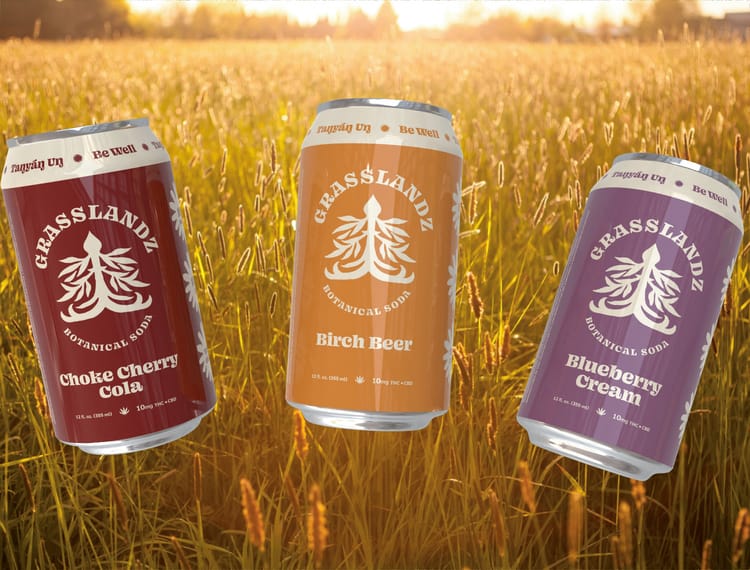
The practices shaping Prairie Island’s farm are not new. They echo teachings that stretch back generations, that soil, water, and plants are relatives, not resources. By cultivating cannabis in a regenerative way, the tribe is living out values of reciprocity and respect that have always defined Indigenous agriculture. This perspective is central to how Prairie Island approaches the wider market. When customers purchase a product, they are not only experiencing a flower or beverage. They are connecting with a philosophy rooted in the land, carried forward by a sovereign people who choose to grow differently.
The Story Beyond the Field
For Demetria Buck, a tribal member of the Prairie Island Indian Community and Marketing Outreach Coordinator overseeing social media and content, the harvest is also a narrative.
“I think it is a very powerful and encouraging thing to see another healthy and strong harvest from our farm this year,” she said. “Our teams have worked so hard for this moment, and it shows in our flower.” Her role is to share that story with authenticity. “I would like to think I bring a special and personal value into our brand by staying true to my people and our beliefs,” Demetria explained.
“Respecting how we talk about our plants as well as how we market it to our communities. As Indigenous folks, we have struggled with how people view us, and it is very encouraging to be able to write our own story.”
For Demetria, the harvest is not only about what comes off the field, but also about how it is carried forward. Through social media, outreach, and content, she sees her work as a way of connecting the care that goes into cultivation with the way the community presents itself to the world. Each post, each campaign, and each story is another opportunity to show that Prairie Island is building a brand rooted in resilience and truth.
Tokáhe; Tokáhe [To-kah-hay] noun Dakota word meaning “to lead, the first one.”
Harvest does not end at the edge of the field. The plants must move outward, reaching shelves and hands across Minnesota. That is the role of Tokáhe, Prairie Island’s distribution company.
“For me, this harvest is about more than the plants themselves,” said Scott Johnson, a tribal member of the Prairie Island Indian Community and General Manager of Tokáhe. "It is about where those plants are headed and what they represent. My job is to make sure that the work done in the fields and the quality we see in the flower is carried forward with the same care as it moves into the wider market. That is a responsibility I take personally.” Scott reflects on what this step means for sovereignty. “Sovereignty is not just about what happens within our borders. It is also about how we take part in the broader market. With vertical integration and the independence our sovereignty provides, Prairie Island can take its product directly to customers. That freedom allows us to decide how our brand is presented, how our values are communicated, and how our story is told. It gives us the ability to participate in the industry on our own terms.”
He continues, “It shows that a tribally owned company and a tribally developed brand can stand shoulder to shoulder in a competitive regulated industry. We can meet the highest standards, deliver a product that competes with the very best, and still stay close to who we are. That balance of quality, competition, and culture is what makes this harvest and this moment so meaningful.”
For Scott, the second harvest is a turning point. “We learned a lot in the first year. We had to get comfortable with the process and understand how to bring products to market. Now, with this harvest, we are ready. We are proud of what we are producing, and we are prepared to stand behind it wherever it goes.”
A Harvest of Perspectives
Taken together, the voices of Fred, Demetria, and Scott reveal the layered meaning of harvest. It is not just cutting plants in the field. It is a reflection of progress and resilience, a demonstration of Indigenous practices in action, and a step into the broader marketplace.
The second harvest carries Prairie Island’s story further. From regenerative rows of cannabis to Island Peži located at Dakota Station, and onward to the statewide reach of Tokáhe, the journey is both local and expansive. It is rooted in soil that is healing, told through a brand that is authentic, and carried forward by a people who know the value of resilience.
As autumn turns, the plants that once stood tall under the Minnesota sun will travel outward, representing sovereignty, stewardship, and the future Prairie Island is choosing to create. Harvest here is not just abundance. It is direction.